Planning to drive in Tasmania but worried about gravel roads, roadkill or narrow mountain roads? I drove about 3 hours a day for 5 days around the island in September 2023, as a very inexperienced driver, and this post covers everything I wish I’d known before setting off.
Short answer: if you’re a beginner with at least a little experience, you can do it. Most roads are paved and quiet, but you’ll need nerve, stamina and a slow, steady approach.
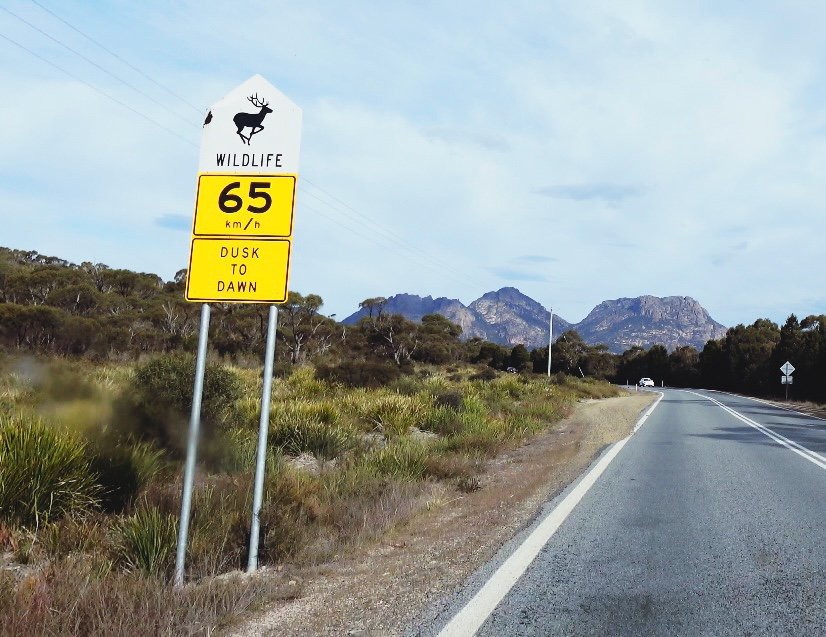
Quick facts
- Gravel roads: almost none on our route; a regular hatchback was fine
- Roadkill: we saw it roughly every 30 minutes, mostly wallabies
- Hardest parts: narrow winding mountain roads and busy city traffic
- Golden rules: stick to advisory speeds and stop driving at sunset
- Car we drove: a compact hatchback (an MG3), not an SUV
In this guide
- The roads we actually drove
- Are there many unpaved roads?
- Can beginners drive in Tasmania?
- How to handle roadkill and wildlife
- Narrow roads, speed cameras and roadworks
- FAQ
The roads we actually drove
- Day 1: Launceston Airport → Launceston city → Cradle Mountain → our cabin near Cradle Mountain
- Day 2: Cradle Mountain → Campbell Town → Wineglass Bay → Bicheno
- Day 3: Bicheno → Swansea → Spiky Bridge → Richmond → Royal Tasmanian Botanical Gardens → Brooke Street Pier → Sandy Bay (Hobart)
- Day 4: Sandy Bay → Tasman Island Cruise (Port Arthur area) → Mount Wellington → Sandy Bay
- Day 5: Sandy Bay → Salamanca Market → Hobart Airport
The full day-by-day plan is in my 5-day Tasmania itinerary.
Are there many unpaved roads? Do I need an SUV?
Before the trip, my biggest worry was hearing that Tasmania has lots of gravel roads. Here’s the honest answer: I didn’t drive every road, but almost every road I did drive was completely fine. I barely saw any gravel at all.
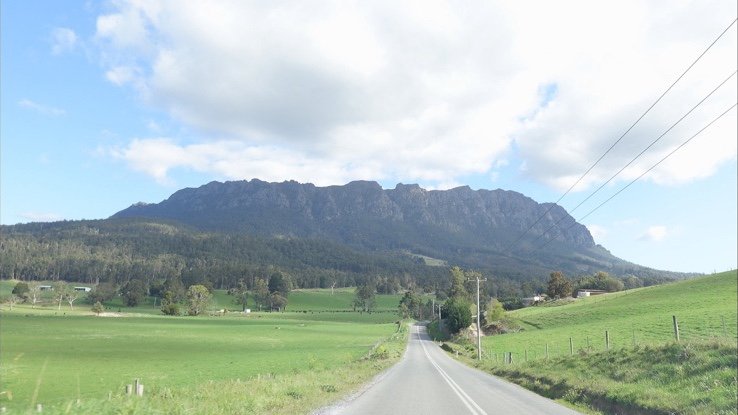
Roads that Google Maps sends you on are generally paved, and you can reach the main sights safely. City roads are smoother, while country roads are a bit rougher and you’ll need a little more gas. That’s about it.

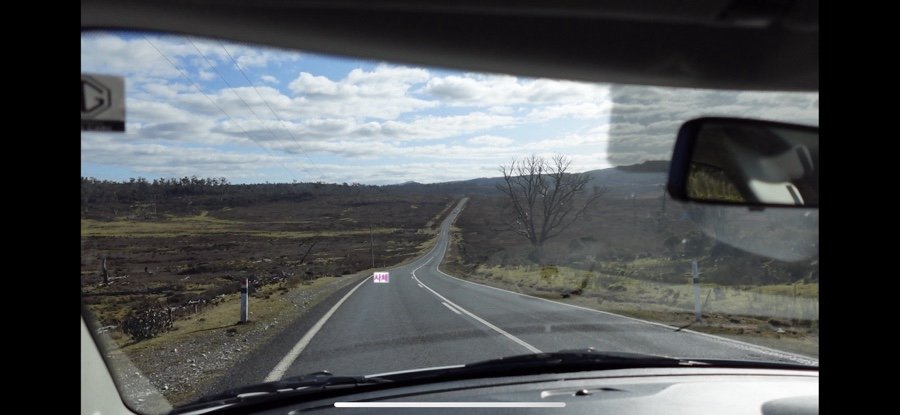
No traffic, big skies, lush scenery: just enjoy the drive. Our rental was definitely not an SUV and it handled everything fine. (Car details are in my Tasmania car rental guide.)
Can beginners drive in Tasmania?
For context: I’d had my license for 7 years but had barely driven. A few lessons and a couple of solo drives on vacation in Korea, and that was it.
On the roads I drove, Tasmania was much harder than driving on Jeju Island (Korea’s popular holiday island). But if you’re brave enough, it’s a great place to practice: there aren’t many cars and you get every kind of road.
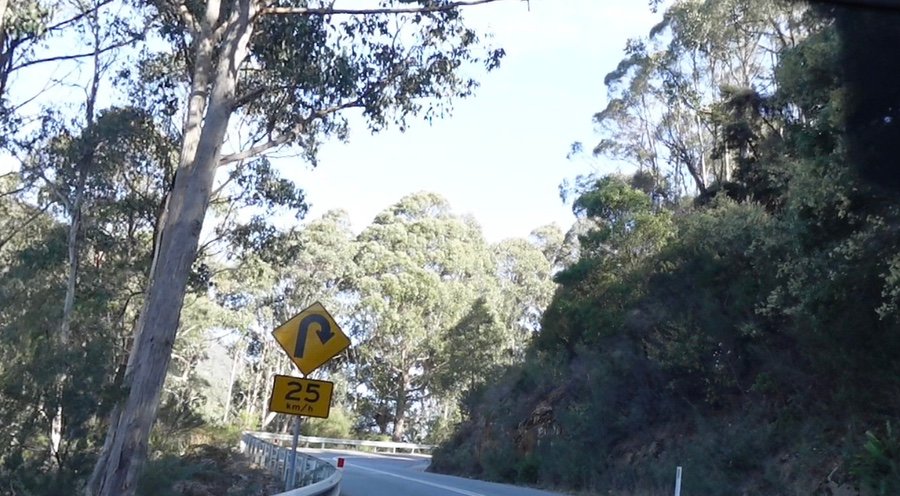

Expect hairpin bends straight out of a racing game, one after another: uphill while turning left, downhill while turning right, uphill U-turns. The roads aren’t wide either, so it sometimes feels like you’re about to clip an oncoming car. After a few hours of this, you may find yourself driving surprisingly smoothly.
Surprisingly, the cities were the hardest part. Town traffic had my heart pounding so hard I nearly cried, and I ended up taking a traditional Korean herbal remedy for nerves twice during the trip.
How to handle roadkill and wildlife
Roadkill is common. It depends on the road, but we saw it about once every 30 minutes, mostly wallabies, plus birds and other small animals. Here’s how I dealt with it.
If there’s a dead animal on the road
Most of the time it was in the middle of the lane, so you can simply pass over it between your wheels. If it’s right where your tires will go and you can clearly see there is no oncoming traffic, you can steer around it slightly.
But avoid crossing the center line if you can, especially on winding roads where a car could be coming around the bend. In that case, sadly, the safest choice is to keep your line.
If a live animal runs in front of you
- No car behind you: brake gently first. Don’t slam on the brakes; animals have good survival instincts and tend to bolt as a car approaches. If it still looks too close, gradually brake harder.
- A car behind you: brake lightly but never stop suddenly. Trying to save an animal can cause a crash. In my experience, a light brake is usually enough for the animal to get out of the way.
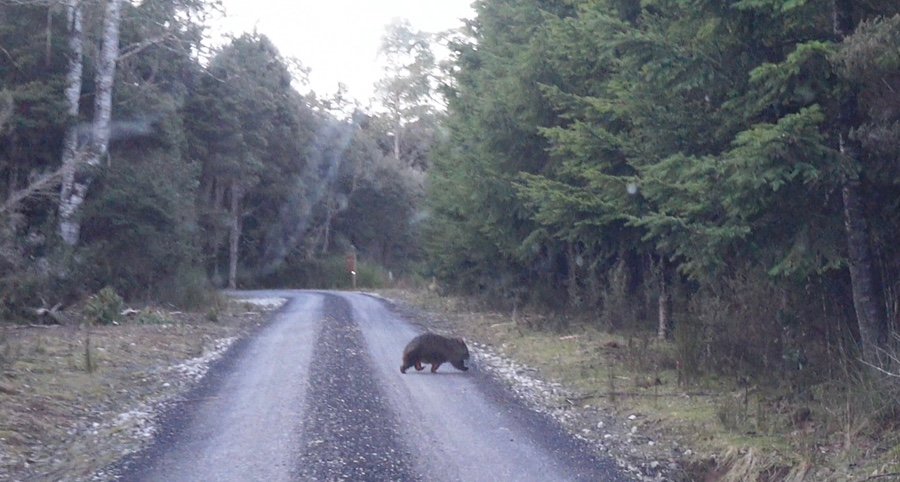
I was lucky and didn’t hit anything, but it doesn’t always go that way. Once a crow landed right in front of my car as if on purpose; there was no one behind me, so I made a full emergency stop and it flew off at the last second. If an animal appears suddenly and there is a car behind you, you may have no choice but to hit it. Sadly, that’s why there’s so much roadkill.
How to prevent it
- Don’t speed. I stuck to the advisory speeds on the yellow signs. Lots of cars overtook me, and that’s fine. Driving at the advisory speed is perfectly safe and legal.
- Don’t drive after sunset. Animals are drawn to headlights at dusk, so I set a daily “back by” time based on sunset.
Narrow roads, speed cameras and roadworks

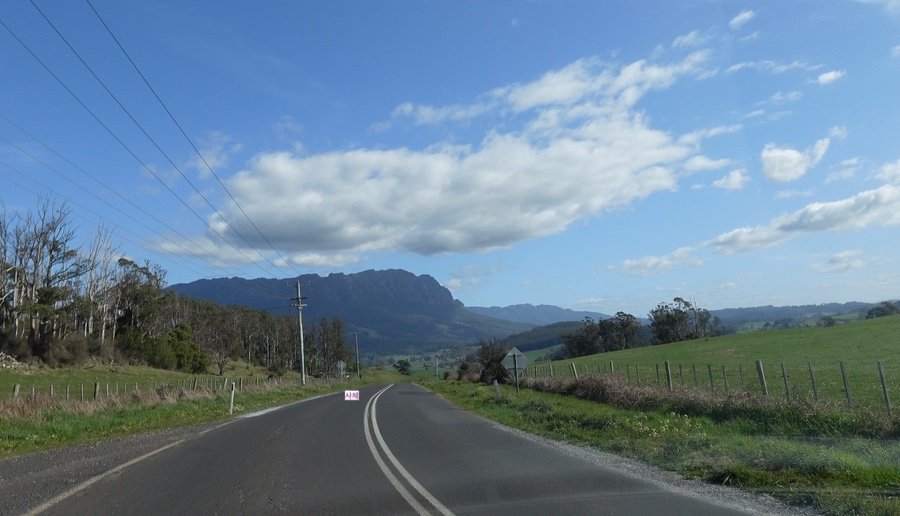
Mountain roads are much narrower than this. They twist so much you often can’t see oncoming cars, and to stay off the center line you end up hugging the edge of the road. When cars came the other way, I sometimes drove slightly off the edge to feel safe.
Some coastal roads, like the one from Hobart toward Port Arthur, are just one lane each way with a dashed center line. Overtaking is allowed, but there was too much traffic for anyone to try. The road down Mount Wellington felt like 1.5 lanes, with a drop-off right beside it. Luckily it was getting dark and only cars going down were on it.

Traffic picks up near Hobart, so watch your speed in the city. I think there was speed detection on the Tasman Bridge, and you’ll see signs like this one. My unscientific guess is that country roads have fewer cameras, because locals flew past the advisory speeds there.

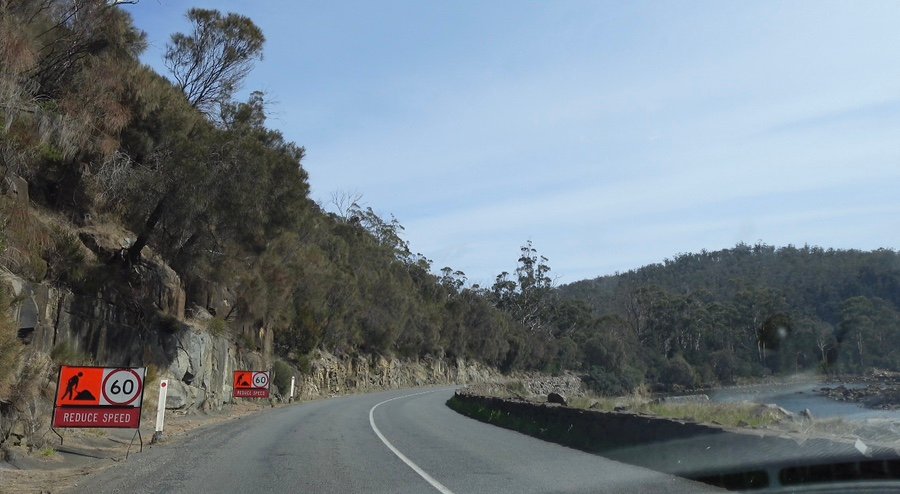
You’ll also see lots of roadworks signs. Even if nobody seems to be around, slow down to the posted speed right away. Soon a traffic controller will stop you, and braking hard at the last second is dangerous. You’ll have to slow down anyway, so do it early and avoid a fine.
My verdict: if you’re a beginner but not a total novice, you can absolutely drive in Tasmania. Just bring courage and stamina. It’s a real step up from easy island-vacation driving.
FAQ
Do I need a 4WD or SUV in Tasmania?
Not for the main sights. We drove a compact MG3 hatchback on paved roads to Cradle Mountain, the east coast, Hobart and Port Arthur with no problems.
Is it safe to drive in Tasmania at night?
I avoided it. Wildlife is most active around dusk, so I planned each day to be back before sunset.
What should I do if an animal jumps in front of my car?
Brake gently and never swerve across the center line or stop suddenly with a car behind you.
More Tasmania and Australia guides
Take it slow, enjoy the views, and you’ll be fine. Safe travels!

Leave a Reply